
Security Operations
CPP20218
Certificate II in Security Operations
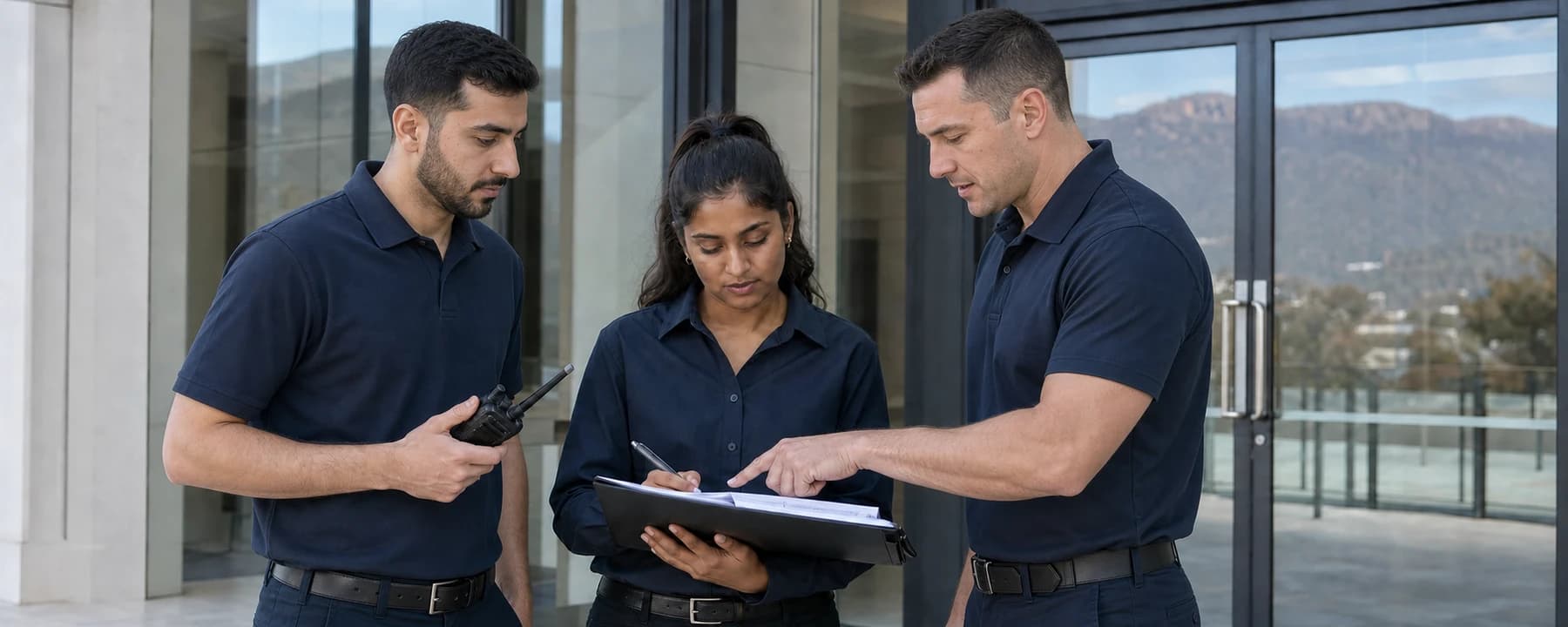
This qualification reflects the role of a security officer, responsible for maintaining safety and security by patrolling, protecting or guarding property while unarmed, and screening entry, monitoring behaviour and removing persons from premises.
Read full course overviewCourse codeCPP20218
Face-to-Face5 Days
E-Learning10 Days
ABOUT THIS COURSE
Official course overview
This qualification reflects the role of a security officer, responsible for maintaining safety and security by patrolling, protecting or guarding property while unarmed, and screening entry, monitoring behaviour and removing persons from premises.
This qualification is intended to align with the following occupational licencing outcomes:
security officer – unarmed guard
security officer – crowd controller.
Occupational titles could include:
security officer
unarmed guard
crowd controller
It provides a pathway to further learning and work in various security roles and settings including, but not limited to:
armed guarding
cash-in-transit
close protection
control room operations
guard dog handling.
Security officers may work alone or work in a team environment under general supervision, operating with limited autonomy and judgement to complete routine but variable tasks, with some accountability and responsibility for their own outputs, work and learning.
Occupational licensing, legislative, regulatory or certification requirements may apply at the time of publication. Please refer to the CPP Companion Volume Implementation Guide for information.
COURSE CONTENT
What the course covers
- Apply effective communication skills to maintain security
- Apply legal and procedural requirements to work effectively within a security team
- Apply WHS, emergency response and evacuation procedures to maintain security
- Apply risk assessment to select and carry out response to security risk situations
- Provide quality services to a range of security clients
- Protect self and others using basic defensive techniques
- Patrol premises to monitor property and maintain security
- Screen people, personal effects and items to maintain security
- Monitor and control access and exit of persons and vehicles from premises
- Monitor and control individual and crowd behaviour to maintain security
- Apply security procedures to manage intoxicated persons
- Apply security procedures to remove persons from premises
- Escort and protect persons and valuables
- Provide First Aid
UNITS OF COMPETENCY
Nationally registered units
WHO THIS COURSE IS FOR
Audience and pathways
- People entering or progressing in security operations.
- Workers completing role-specific, licensing or workplace training requirements.
- Organisations seeking practical, nationally recognised training for their teams.
ASSESSMENT
How competency is demonstrated
Assessment may include written or online knowledge questions, observation of practical tasks, workplace-style scenarios, verbal questioning and supporting documentation. Exact assessment activities depend on the nationally recognised unit or qualification.
BEFORE YOU ENROL
Entry and participation requirements
- Photo identification and appropriate language, literacy and numeracy skills are required.
- Licensing, suitability and regulatory requirements may apply to employment outcomes.
- Students should confirm current Tasmanian licensing requirements before enrolment.
Course availability, delivery duration and licensing requirements can change. NSTA Tasmania will confirm the current training plan, prerequisites and applicable regulatory requirements before enrolment.